



J Balvin and Ryan Castro Unite on “TONTO” Ahead of Castro’s Historic Medellín Stadium Show

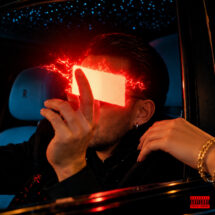
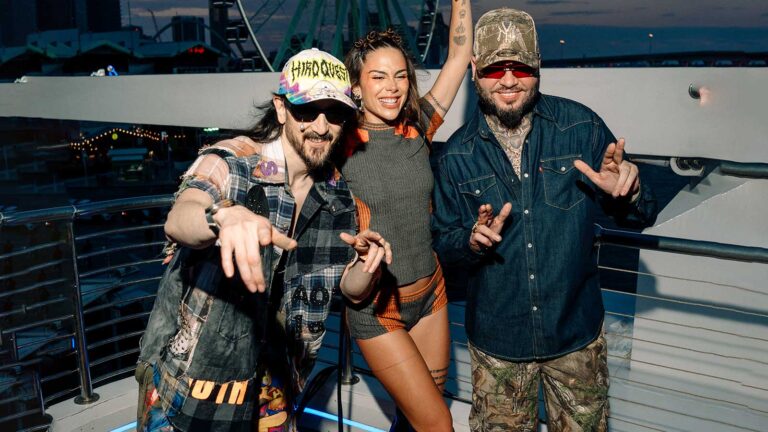
There’s been an electricity surrounding J Balvin and Ryan Castro in recent months, red carpets, surprise appearances, and an unspoken creative alignment that hasn’t gone unnoticed by fans. With the arrival of “TONTO,” that quiet speculation begins to crystallize into something tangible.
The new single, produced alongside DJ Snake, doesn’t feel like a one-off collaboration. It feels architectural, an opening chapter rather than a closing statement. Where Balvin delivers measured melodic phrasing that glides between hook and cadence, Castro injects a grittier, street-rooted texture. The interplay is deliberate. Nothing overlaps unnecessarily. Each verse expands the sonic space rather than competing for it.
As the track unfolds, slightly warped synths surface a subtle but unmistakable DJ Snake fingerprint, widening the song’s global dimension without diluting its urbano core. The production doesn’t overpower the record’s reggaeton pulse; it reframes it. That restraint is key. “TONTO” understands the genre’s past while designing a scalable future.
The visual direction reinforces that ambition. Directed by UN JACKALOPE and produced by BROKEN MINDS, the video opens with the stark title card: “Érase una vez en paz.” A quiet domestic scene featuring Valentina Ferrer and her son Río quickly gives way to tension a messenger arrives, and it’s time to go. The mood shifts from intimacy to noir.
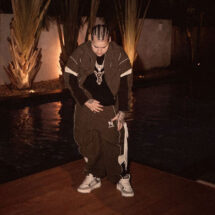
Shot across New York streets, Balvin and Castro move through fur trench coats with calculated cool, channeling 1930s gangster cinema. The video references iconic film language stylized framing reminiscent of Pulp Fiction, playful tonal layering inspired by Who Framed Roger Rabbit, and the cinematic mood textures associated with Once Upon a Time in Hollywood. The choreography nods directly to Smooth Criminal, with Balvin executing a modernized anti-gravity lean — not as imitation, but as cultural reinterpretation.
The result feels like a gangster musical fantasy staged with meticulous control. It’s theatrical without being cartoonish, stylized without losing credibility. The chaos is choreographed.
But the larger question remains: why now?
For Ryan Castro, “TONTO” arrives at a career inflection point. Fresh off a headline-making appearance at Premio Lo Nuestro, where he premiered the single alongside Balvin and delivered a high-energy medley of “La Villa” and “Ba Ba Bad Remix,” the Colombian star is scaling aggressively. In March, he launches the LATAM leg of his Sendé World Tour, culminating in his only Colombia show of the year a historic April 25, 2026 concert at Medellín’s Estadio Atanasio Girardot, which sold out in two hours.
That timing is not accidental.
Aligning with Balvin Medellín’s first global reggaeton ambassador ahead of a stadium milestone strengthens Castro’s positioning not just commercially, but symbolically. It signals co-signature. Continuity. A passing of generational momentum that doesn’t feel forced.
For J Balvin, who has spent the past several years recalibrating after peak crossover dominance, “TONTO” reads as consolidation rather than reinvention. Instead of chasing global pop trends, he’s anchoring himself in Colombian urban identity while partnering with one of the country’s fastest-rising exports. The move stabilizes his cultural capital domestically while preserving his international leverage.
And then there’s DJ Snake the global bridge. His involvement quietly internationalizes the record without diluting its Medellín DNA. That balance matters in 2026, when Latin urban music is navigating saturation and fragmentation. “TONTO” doesn’t attempt to outpace the genre; it refines it.
This feels less like a single and more like a strategic alignment.
Every detail in “TONTO” feels intentional, from the cinematic symbolism to the rollout timing ahead of a sold-out stadium show. If this is the opening act, it suggests a broader narrative unfolding between Medellín’s established titan and its ascendant force.
What comes next will determine whether “TONTO” stands as a moment or the beginning of a movement.
For continued coverage of Latin urban releases, tour milestones, and industry shifts shaping the genre, stay connected with LaMezcla.com and discover curated reggaeton playlists inside the LaMezcla Music App.