




Francis Méndez, Legendary Dominican Radio Host and ‘Señor Bolero’ Voice, Dies at 75
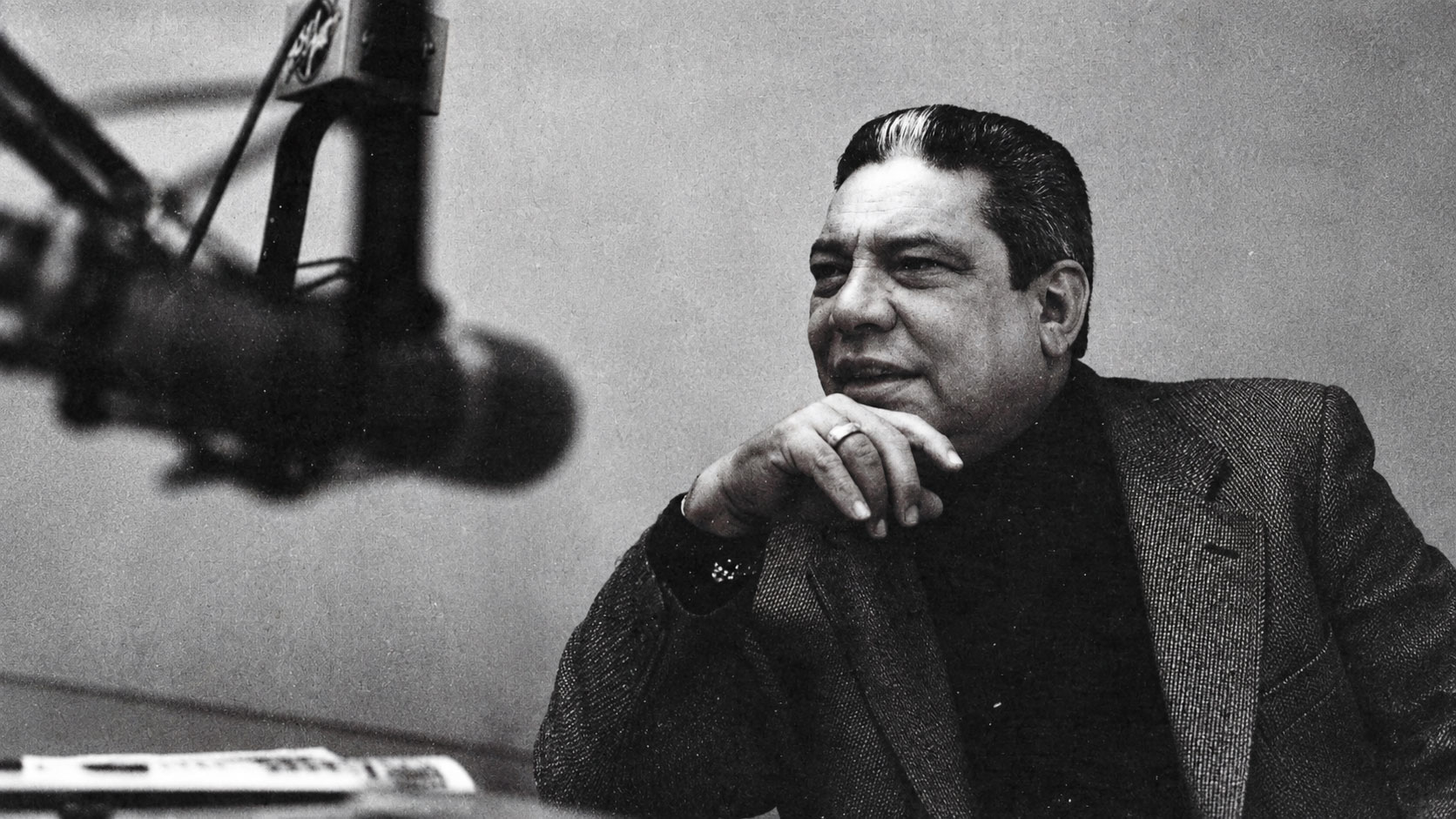
For generations of Dominican and Latino listeners, Francis Méndez was more than the man behind a microphone. His voice traveled from Jarabacoa to Santo Domingo and eventually across New York City, becoming part of the soundtrack of an immigrant community building a new life while remaining connected to home.
Méndez, the veteran Dominican broadcaster, communicator and former artist manager whose career included Radio Guarachita, Mega 97.9’s El Vacilón de la Mañana and the beloved Señor Bolero, died September 8 at age 75. Reports from New York and the Dominican Republic said he died at NewYork-Presbyterian/Columbia University Irving Medical Center in Upper Manhattan, surrounded by his wife, Josefina, and several of his children.
His family said Méndez had requested that no public wake or burial services be held. His remains will instead be cremated during a private ceremony. He is survived by his wife, four children and an extended family.
The announcement prompted tributes across Dominican and New York media. Mega 97.9 remembered him as one of the station’s most beloved voices, pointing to a broadcasting career that extended for more than five decades.
But the scale of Méndez’s career is best understood by going back to the Dominican Republic.
Born March 28, 1951, in Jarabacoa, Méndez found radio as a teenager. According to biographical accounts cited by Diario Libre, an early opportunity came while helping promote products for the Bermúdez liquor company. After being asked to test a repaired microphone by reading promotional copy, the strength of his delivery reportedly earned him a job on the spot.
By 1967, he was practicing his craft at Radio Jarabacoa. Two years later, after completing secondary school and moving to Santo Domingo, Méndez joined one of the most consequential stations in Dominican popular-music history: Radio Guarachita. He made his debut there on December 15, 1969, at 18 years old.
Radio Guarachita was not simply another stop on a résumé. The station operated during a critical period for Dominican popular music and became closely associated with the expansion of bachata at a time when the genre still faced considerable social stigma. Historical accounts identify Méndez among a respected group of broadcasters who worked at the station, while Radio Guarachita helped provide exposure to artists including José Manuel Calderón, Luis Segura and Leonardo Paniagua.
Méndez also hosted El Mensajero Doble U during his time at the station, with historical accounts highlighting his professional delivery and cultural knowledge.
His influence soon extended beyond announcing records.
Méndez became involved in artist development and promotion, with accounts crediting him with helping promote artists including Leonardo Paniagua and Cheché Abreu. He later established his own artistic office and managed the career of merengue star Fernando Villalona, adding another dimension to a career increasingly connected to the broader Dominican entertainment business.
By the middle of the 1980s, Méndez’s voice had earned recognition within the Dominican broadcasting industry. On January 26, 1987, the Círculo de Locutores Dominicanos presented him with its Micrófono de Oro, recognizing him as the outstanding commercial voice announcer for 1986. Contemporary coverage praised both the quality of his voice and the commercial work he had recorded during that period.
That recognition is important to understanding his later success in New York. Méndez did not arrive in the United States as an unknown broadcaster searching for an identity. He arrived with decades of Dominican radio culture already embedded in his delivery.
From Dominican radio to the sound of New York
Méndez relocated to New York in 1990 and settled in Washington Heights, placing him at the center of one of the most important Dominican communities outside the Caribbean. His audience was no longer confined to the Dominican Republic. His voice could now reach Latino households throughout New York and the surrounding region.
His American career expanded across both television and radio. Méndez served as an official voice for Univision’s Channel 41 between 1993 and 1999, worked with Discovery Channel and later held a voice role at Telemundo’s Channel 47. He also became a sought-after master of ceremonies for events throughout New York and New Jersey.
Then came the chapter that introduced him to another generation.
At Mega 97.9, Méndez joined El Vacilón de la Mañana, the enormously influential New York morning show led by Luis Jiménez. Around 2000, Jiménez developed an on-air role for Méndez that allowed the veteran broadcaster to deliver serious news through the more colloquial language and humor of New York’s streets.
It represented a striking reinvention.
The polished commercial announcer who had been recognized in Santo Domingo in the 1980s could operate inside the unpredictable, personality-driven environment of El Vacilón. At the same time, Méndez maintained the authority and vocal discipline of traditional radio.
That versatility helps explain his longevity. Méndez belonged to an older school of broadcasting, but he repeatedly adapted his voice to new formats, new cities and new audiences without abandoning the fundamentals that had established his reputation.
‘Señor Bolero’ and radio as a connection to home
If El Vacilón revealed Méndez’s ability to adapt, Señor Bolero demonstrated the emotional power of his broadcasting.
Méndez took over the program on 93.1 Amor in 2000, creating a Sunday destination centered around bolero and romantic Latin music. The show eventually became one of the defining programs of his New York career.
Its importance extended well beyond ratings.
In 2006, Forbes profiled Méndez and Señor Bolero, describing Sunday mornings in Washington Heights when his voice could be heard from taxis, apartments and neighborhood streets. At the time, the program was reported as the top-rated show in its market, even outperforming English-language stations during its time slot.
But the deeper story was why people listened.
Boleros carried memories. For immigrants living hundreds or thousands of miles from where they were born, the songs Méndez played could reconnect them with parents, relationships, neighborhoods and moments from another life.
That makes Señor Bolero an important piece of Latino radio history.
Long before an algorithm could build a nostalgia playlist in seconds, personalities such as Méndez served as human curators. The broadcaster knew not only which record to play, but why that record mattered to the person listening. Radio created a shared experience: thousands of people scattered across a city hearing the same song and remembering different versions of home.
For New York’s Dominican community in particular, Méndez occupied both sides of that cultural bridge. He understood the Dominican Republic people remembered and the New York they were learning to call home.
A career that followed Dominican music across borders
Seen across more than five decades, Méndez’s career also mirrors the globalization of Dominican culture.
He began in Jarabacoa, developed professionally in Santo Domingo and worked at Radio Guarachita during an era when Dominican popular music still depended heavily on terrestrial radio personalities to reach national audiences. He moved into artist management as merengue stars became larger commercial figures, then followed the Dominican diaspora to New York as the city emerged as another center of Dominican media and entertainment.
That progression matters.
Today’s Latin music ecosystem is built around streaming platforms, social networks and instantly accessible global catalogs. Méndez came from an era when the person introducing the record could be almost as important as the technology transmitting it. DJs, announcers and programmers functioned as tastemakers, cultural interpreters and trusted companions.
His ability to remain relevant through that transformation — from Radio Guarachita to Univision and Telemundo, from El Vacilón to Señor Bolero — makes his career less about one famous program than about the durability of the relationship between broadcaster and audience.
It also places Méndez within a generation of Dominican communicators who helped establish a Spanish-language media infrastructure in New York capable of speaking directly to a growing Latino population rather than treating that audience as peripheral.
The microphone changed. The audience expanded. The formats evolved. Méndez remained.
Francis Méndez leaves behind more than five decades of broadcasting history and a body of work stretching across radio, television, live entertainment and artist development. He also leaves something considerably harder to document: the memories attached to hearing a familiar voice come through the radio.
For listeners who knew him from Radio Guarachita, he represented an earlier Dominican broadcasting tradition. For another generation, he was part of the irreverent universe of El Vacilón de la Mañana. And for countless Sunday-morning listeners, he will remain Señor Bolero — the voice accompanying songs about love, distance, heartbreak and memory.
In a career built around connecting people through sound, perhaps that is the most fitting legacy of all.
Francis Méndez belonged to a generation that demonstrated how powerful a voice, a microphone and the right record could be in keeping a community connected across borders. LaMezcla will continue documenting the artists, broadcasters and cultural figures who built that foundation while preserving their music and stories for the generations that follow through LaMezcla.com and the LaMezcla Music App.