






Eddy Herrera and Miriam Cruz Join Forces Again on New Merengue “Se Me Hace Agua la Boca”
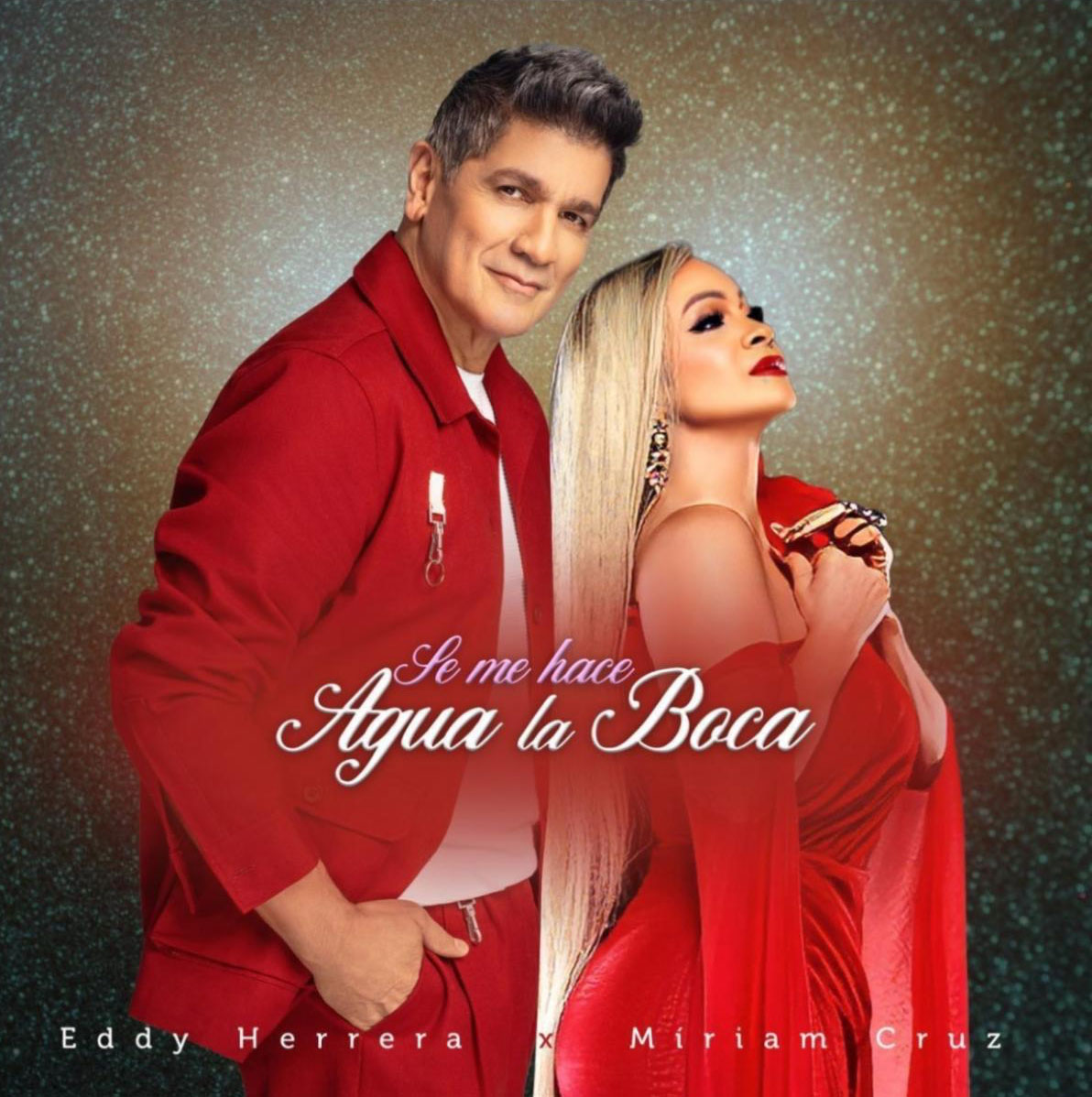
Eddy Herrera and Miriam Cruz are bringing two generations of Dominican merengue history into the same room with “Se Me Hace Agua la Boca,” a new collaboration that arrives during an unusually strong period of renewed visibility for Herrera—and, more broadly, for classic merengue in the digital era.
Released across digital platforms and radio, the single pairs Herrera’s romantic approach to merengue with Cruz’s unmistakable presence, building its story around a relationship where emotional commitment and physical attraction are operating on different levels. He wants something deeper; she is drawn primarily to the chemistry between them.
Written by Enghel Mata and Eddy Herrera and produced by Juan Daniel Montero, “Se Me Hace Agua la Boca” turns that imbalance into a playful back-and-forth between its two performers. Rather than treating Cruz as a conventional guest feature, the record uses the contrast between their voices to establish two perspectives inside the same relationship.
The collaboration also continues an existing musical connection between the Dominican stars. Herrera and Cruz previously appeared together on “Te Pido Perdón,” alongside La Materialista, and reunited for a live version of “A Dormir Juntitos” on Agradecido (Live). Their latest recording, however, arrives under different circumstances: both artists now represent not only successful careers in merengue, but the genre’s ability to remain active across multiple eras of Latin music.
The accompanying music video was filmed at Vacacional Matua in the Dominican Republic, with Maiter Valdezdirecting and Bryan Ureña serving as director of photography. Its release accompanies the song’s arrival across radio and streaming platforms.
What makes the timing particularly interesting is what has happened around Herrera’s catalog during 2026.
More than two decades after becoming one of his signature recordings, “Tú Eres Ajena” has experienced a major social-media revival, driven in part by a TikTok dance trend and participation from artists and personalities including Cristian Castro, Ozuna and Wisin. The resurgence has introduced the record to listeners who were not necessarily part of Herrera’s original audience.
That matters beyond nostalgia.
Catalog discovery has become an increasingly important bridge between different generations of Latin music listeners. Songs no longer need a traditional reissue campaign to return to cultural circulation; a dance, meme, creator or unexpected celebrity moment can push a decades-old recording back into the conversation. For merengue, a genre whose mainstream Latin-market visibility has often been overshadowed in recent years by urbano, música mexicana and bachata, those rediscovery cycles can create new entry points without requiring artists to abandon the musical identity that built their careers.
Herrera is now positioned to convert that catalog attention into interest around current music.
“Se Me Hace Agua la Boca” does not attempt to reinvent him as an urbano artist or force merengue into a contemporary trend simply for relevance. Instead, Herrera and Cruz lean into the genre’s traditional strengths: live instrumentation, movement, romantic storytelling, charisma and an immediately danceable chorus.
That distinction is important. The most sustainable opportunity for veteran tropical artists may not be chasing the dominant sound of the moment, but using modern discovery platforms to make established sounds accessible to listeners encountering them for the first time.
Herrera enters that conversation with significant institutional momentum as well. His album Novato Apostador won Best Merengue/Bachata Album at the 26th Annual Latin GRAMMY Awards, giving him the second Latin GRAMMY victory of his career after Ahora won the same category in 2020.
The combination creates an unusual career position: Herrera is simultaneously benefiting from nostalgia surrounding one of his biggest catalog records, receiving contemporary industry recognition for new work and maintaining an active international touring schedule.
His recent five-show run through Cajamarca, Nazca, Ica, Ayacucho and Arequipa in Peru reinforces that longevity. Rather than functioning solely as a legacy touring act, Herrera continues feeding new recordings into an audience already engaging with different eras of his catalog.
For Dominican merengue, that crossover between catalog and current releases may ultimately be more significant than any single viral moment.
Digital platforms have shortened the distance between generations. A listener discovering “Tú Eres Ajena” through TikTok can immediately move into Herrera’s current catalog, while a collaboration with Miriam Cruz introduces another foundational Dominican voice into that discovery cycle. The opportunity is not necessarily to transform merengue into something else, but to reconnect its existing catalog, personalities and dance culture with the platforms shaping today’s listening habits.
“Se Me Hace Agua la Boca” arrives squarely inside that window.
The next question is whether the renewed attention surrounding Herrera becomes an isolated viral chapter or develops into sustained consumption of his newer material. With a Latin GRAMMY-winning album behind him, an internationally active touring schedule and now another collaboration with Miriam Cruz, Herrera has an opportunity to turn rediscovery into something more valuable: another active chapter of his career.
For more new Latin music, artist stories and emerging sounds across the Dominican Republic and the wider Latin market, continue exploring LaMezcla.com and the LaMezcla Music App.